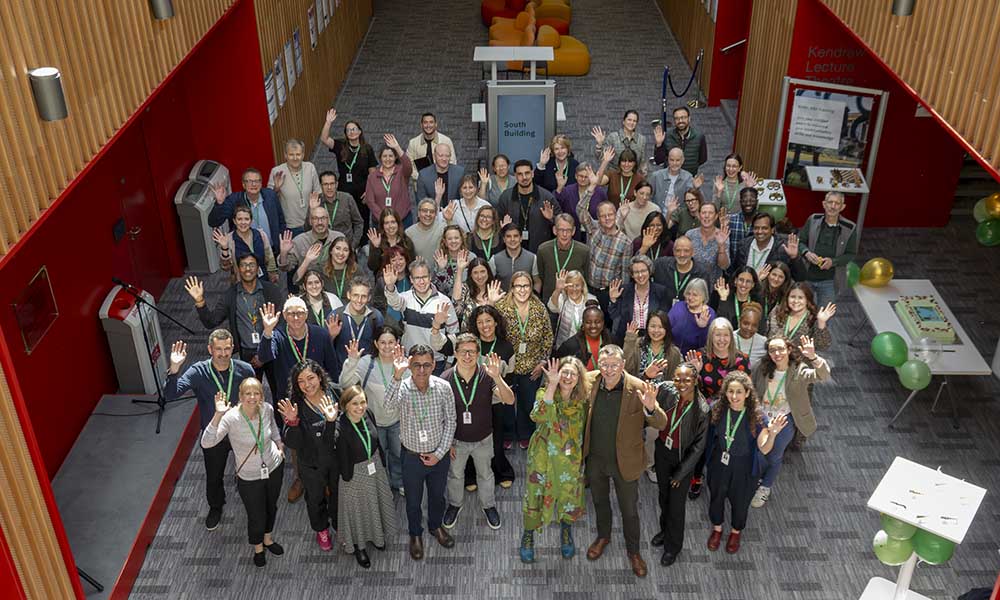
/ via embl/
After building one of the world’s leading bioinformatics training programmes, Cath Brooksbank reflects on the importance of trust, and how to never lose your enthusiasm for science
Within six months of joining EMBL’s European Bioinformatics Institute (EMBL-EBI), Cath Brooksbank managed to delete the Gene Ontology knowledgebase – one of biology’s most widely used resources – and reinstate it at 6 p.m. on a Friday. “It was a steep learning curve,” she laughed, remembering the moment. It was also a fitting start for someone whose whole career has been all about throwing herself into unfamiliar territory and making it her own.
For over 20 years, Brooksbank and her team have been developing EMBL-EBI’s leading bioinformatics training programme. This was not quite where she expected to be when she was growing up. Now freshly retired, she looks back on her career with a mix of nostalgia and pride.
Brooksbank is the first person in her family to go to university. At the age of 12, she wanted to be a pathologist, and she went on to study medicine at the University of Oxford. “I soon realised that it was going to be very hard for me to be a doctor because I got too involved in patients’ stories,” said Brooksbank. Along the way, Brooksbank uncovered an interest in molecules, so she swapped the clinic for a PhD in biochemistry at the University of Cambridge.

The next career turn came from a friend, Phillip Hawkins, who noticed how much she enjoyed writing and suggested she try scientific editing. Brooksbank took a job as an editor at Trends in Cell Biology for six months. There she met Jo McEntyre – the current Interim Director of EMBL-EBI – who gave her the opportunity to stay in science publishing, working on the journal Trends in Biochemical Sciences. In 2002, after a couple of years in the Nature Reviews editorial team, she spotted a scientific database curator role in the Gene Ontology team at EMBL-EBI.
Soon after joining EMBL-EBI, Brooksbank – a self-declared introvert – got to know all of the 200 people then working at the institute, persuading many of them to get involved in the fledgling training programme. She became the Scientific Outreach Officer at EMBL-EBI in 2006, then Head of Outreach and Training, and finally Head of EMBL-EBI Training in 2012, a role she maintained until her retirement in 2026.

From one training suite to half a million learners
The real sea change came with a funding application to the UK Government for a new wing of the EMBL-EBI building, which would also house the institute’s first training suite. The direction of travel was clear: outreach mattered, and a training programme was a crucial part of this.
Brooksbank was integral to the funding application, and by the time the new wing was open, EMBL-EBI had a full scientific training programme ready. For Brooksbank, the moment marked the start of a two-decade mission to build capacity in bioinformatics. She remembers it with a mix of excitement and mild panic: “Although I had never written a line of code, I was attuned to the needs of users, and I could translate between bioinformatics and the needs of biologists,” said Brooksbank.
EMBL-EBI Training core principles
EMBL-EBI’s world-leading bioinformatics training programme is based on several core principles:
- Led by experts
- Innovative
- Inclusive and open to scientists at all levels
- Agile
- Balance between theory and practice
- Environmentally sustainable
At the time, EMBL-EBI provided nine in-person courses every year. Wanting to reach more people, the team launched an online training programme in 2006. “The initial launch was a bit of a flop. It focused on high-end video, which made it very hard for us to keep up. So we put this on hold for a few years while we came up with another plan,” said Brooksbank.
Brooksbank is a strong believer in the adage ‘if at first you don’t succeed, try and try again’. She and her team redesigned the online programme to support people who couldn’t attend the live training. They recruited EMBL-EBI colleagues who were experts in their fields to write and edit the training content themselves, with editorial and quality control from the team. This time, demand for online training soared, and numbers remain high to this day. In 2025, almost half a million users accessed EMBL-EBI’s online training courses.
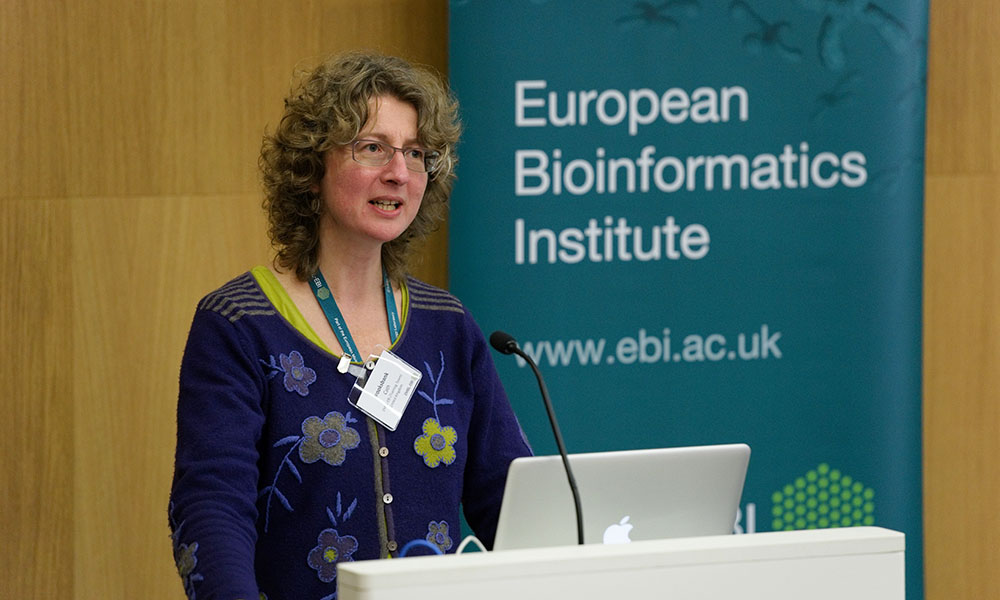
The same instinct to widen access shaped what came next. In 2012, a request from BioPlatforms Australia sparked EMBL-EBI’s first train-the-trainer events. “They asked for help building bioinformatics capacity. Their bioinformatics landscape at the time was dispersed, and they were struggling to get a critical mass of experts. They wanted to send a representative from each state to observe our training courses in action. This is when we realised there was a big demand for train-the-trainer type activities,” remembered Brooksbank.

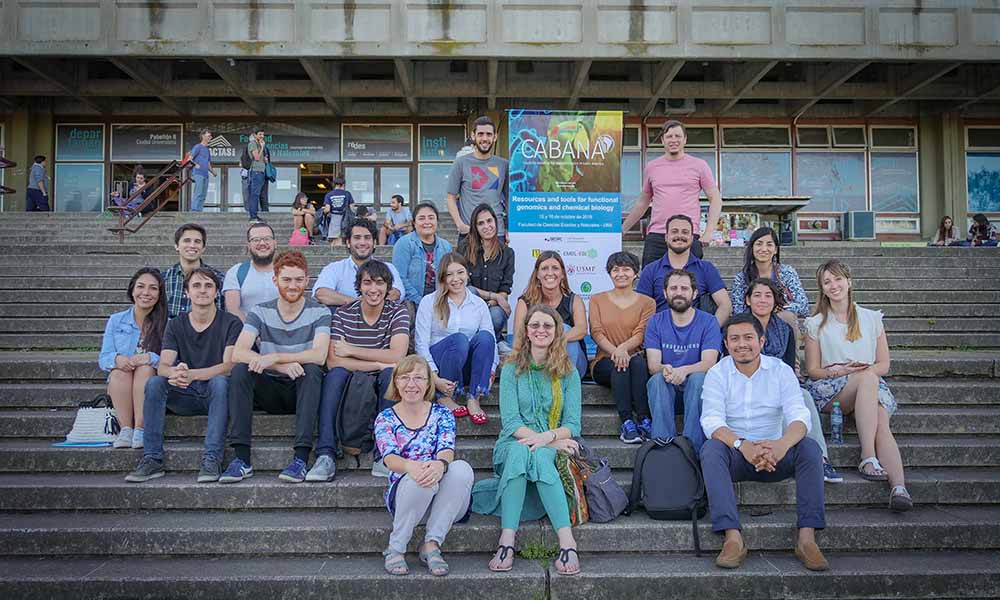
That demand also paved the way for the CABANA project, designed to strengthen bioinformatics capacity in Latin America, with a focus on communicable diseases, sustainable food production, and protecting biodiversity. Co-developed with partners in the region, the programme was funded by UK Research and Innovation in 2017.
“In Latin America, Cath has supported initiatives such as CABANAnet and BiotrAIn, fostering not only capacity development but also the transfer of leadership to researchers within the region. The value lies in empowering local communities to lead and sustain these projects, strengthening regional scientific autonomy and long-term impact,” said Jose Arturo Molina Mora, Professor at the University of Costa Rica.
“The value lies in empowering local communities to lead and sustain these projects, strengthening regional scientific autonomy and long-term impact.”
When the COVID-19 pandemic forced many institutions to close their doors, EMBL-EBI’s Training team quickly pivoted to online-only training and found its global audience larger than ever. Lessons from that period still shape the programme today – above all, the desire to make the programme as accessible as possible.
Working closely with EMBL’s International Centre for Advanced Training (EICAT), the EMBL-EBI Training team continues to engage scientists at every level with the latest bioinformatics developments. In 2025 alone, Brooksbank’s team organised 18 live courses, reaching over 500 delegates, alongside the many thousands accessing its growing library of online courses and webinars.

Now Brooksbank is moving on from EMBL-EBI to “unleash her inner bohemian” and return to what she’s loved doing all her life: writing and making beautiful things. Below, in her own words, are some of the lessons she’s taking with her.

It’s all about the people
“Don’t be afraid to change direction – life is an adventure, not a conveyor belt.”
“It really is all about the people. This was a hard lesson for me. I was completely focused on my to-do list, so it took me a while to learn that the best way to tackle projects is by sharing them with others. Trust is an important part of that package, including trusting people to do things differently – but usually better – than I would.”
“Make time to figure out what your personal values are, and find people and organisations who share these values.”
“I often believe in my people more than they believe in themselves. Every team is unique, and every member of a team has their ambitions and strengths that the team leader needs to bring together under the broader institutional strategy.”
“Coming from an editorial background, I wanted to make things polished and perfect before sharing them with anyone. But colleagues at EMBL-EBI have shown me that sharing ideas early on enables people to have input and ownership, and getting feedback from a diverse crowd is invaluable.”
“Good mentors come in all shapes and sizes. They can be your seniors or your juniors. They let you show up as your authentic self without any need to impress them.”